From Digital Risks to the Voice of Young People
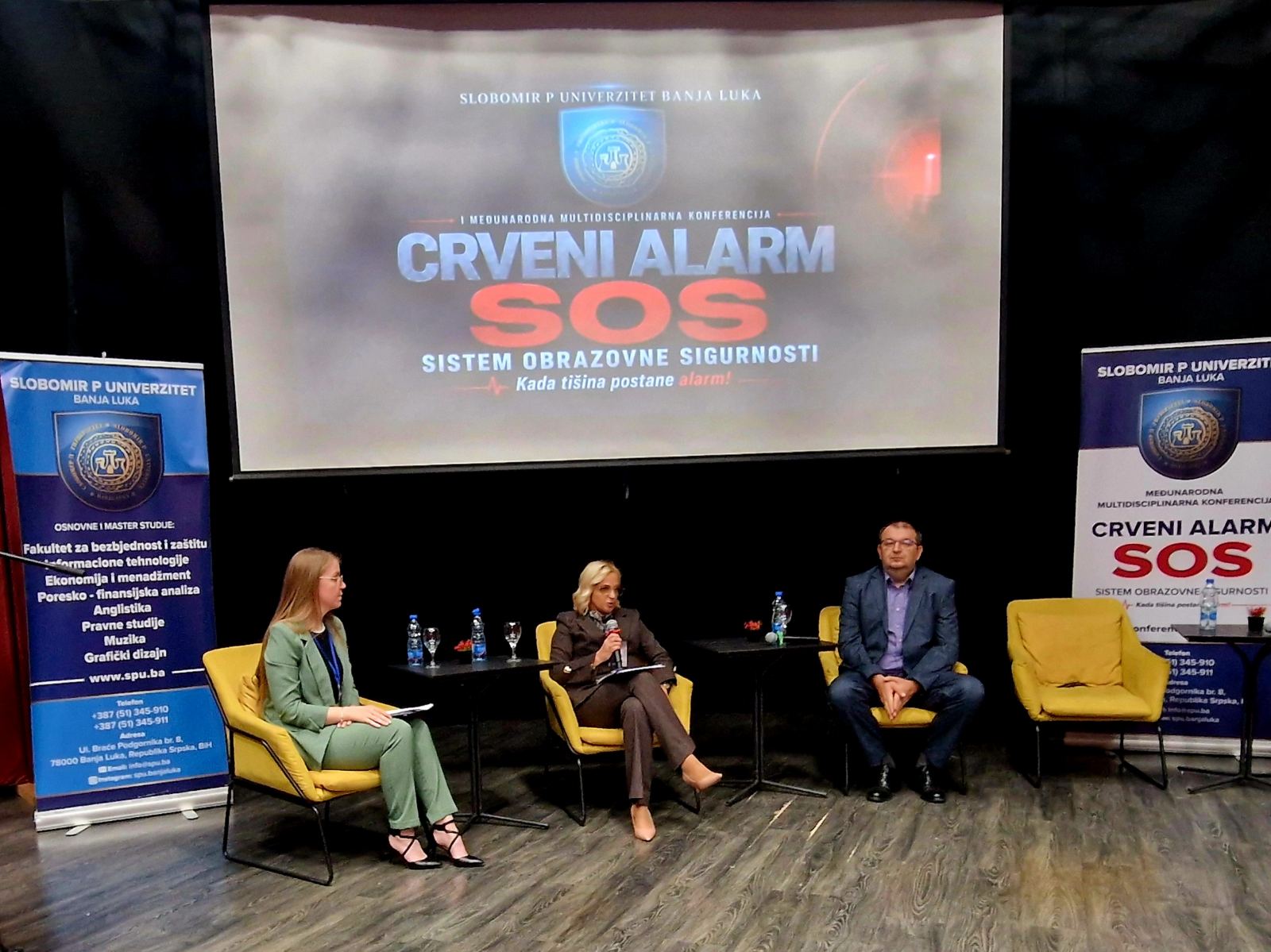
The second day of the conference, held on 29 September 2026, featured a comprehensive programme that brought together technological, psychological, economic and pedagogical aspects of peer violence prevention.
The day began with a panel discussion on digital footprints and invisible consequences, during which experts in technology and psychology discussed how contemporary technologies, artificial intelligence and social media are shaping new forms of violence, as well as how they can be used to identify risks at an early stage and create a safer digital environment for children and young people.
This was followed by a session featuring research papers in the fields of digital environments, information technology and psychology. The research presented addressed the protection of children from cybercrime, the mental health of teaching staff, algorithmic content personalisation, and information and media literacy.
The subsequent panel, entitled “The Cost of Inaction”, focused on the socio-economic aspects of prevention. Participants examined the cost to society of insufficient investment in prevention and emphasised the importance of investing in education as the foundation for creating a safe and supportive school environment.
A particularly memorable panel, entitled “What Don’t Adults Understand?”, placed young people at the centre of the discussion. Students spoke openly about their experiences, pressures and needs, emphasising that effective solutions cannot be developed without their participation and perspectives.
The conference concluded with the presentation of the book “Modelling Security and Protection Systems”.
The Rector, Professor Slobodan Župljanin, PhD, briefly summarised the outcomes of the two-day conference and officially closed the event, announcing that the conclusions would be shared with all participants, allowing them to contribute to their final formulation.
We would like to thank all panellists, authors, students and guests for their participation and valuable contributions. We believe that the discussions held over these two days represent an important step towards creating a safer educational environment.